Good evening, family. Let me talk to you the way we talk to each other not in the language that floats over our heads like Charlie Brown’s teacher, but in the language that lands on MLK Blvd, in the language that reaches the porch, the pew, the bus stop, the break room, the places where real life happens.
Because I’ve been watching something. And I’ve been feeling something. And I’ve been carrying something in my throat so heavy I joked I needed Kaopectate just to swallow it down.
See… every time somebody shows up with a message meant for us, the people with alphabet soup after their names — the PhDs, the JDs, the MBAs, the “I‑studied-you-but-I-don’t-know-you” crowd — they pour a royal king’s cup of lard all over the moment. They make it slippery. They make it messy. They make it impossible for folk to grab onto the truth.
And then they wonder why nobody heard it.
Let me tell you why.
Because the message wasn’t spoken in our language.
Because the message wasn’t shaped for our lived reality.
Because the message wasn’t carried by somebody who knows what it feels like to be followed around the beauty supply store buying $134 worth of “natural hair” products from people who don’t even wear the hair they’re selling.
Because the message wasn’t shaped for people who’ve been told for 14 years they can’t have more than $5 in savings and then punished for not magically crossing the bridge the moment the rule changed.
Because the message wasn’t shaped for people who’ve been abandoned, dismissed, overlooked, and then told to perform perfection the moment somebody steps on a stage.
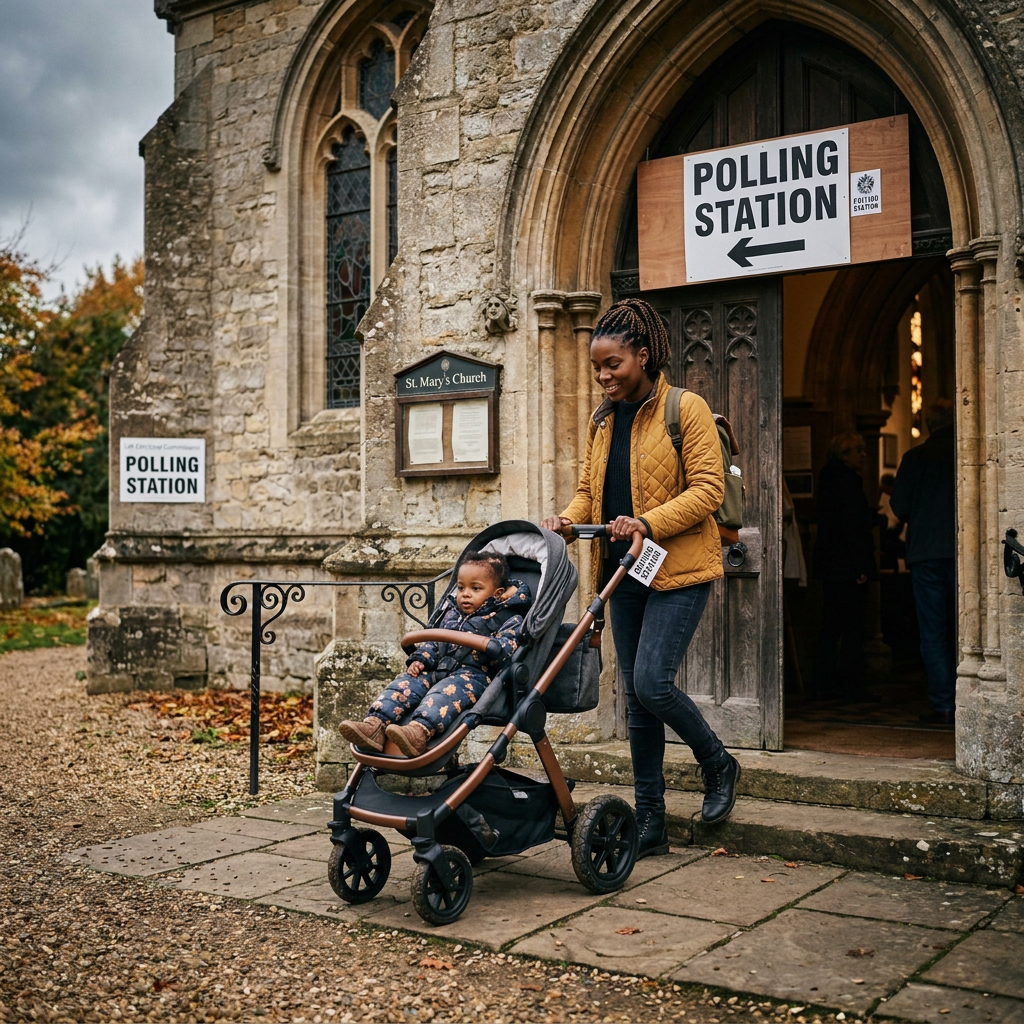
And let me say this gently — when Kamala walked into that church with 90 days on the clock, fresh out of political ER, folk didn’t hear her. Not because she didn’t speak. Not because she didn’t identify her lineage. Not because she didn’t stand in her truth. But because hurt people hear through hurt filters. Suspicious people hear through suspicious filters. Tired people hear through tired filters.
And the alphabet‑soup crowd didn’t translate. They didn’t bridge. They didn’t connect the micro to the macro. They didn’t say, “Let me meet you where you are.” They said, “Let me talk to you like you already live where I live.”
That’s not how you reach folk.
That’s not how you build trust.
That’s not how you break generational silence.
And that’s not how you speak to people who’ve been carrying cages inside their chests longer than some of these experts have been alive.
I know that cage. I’ve been in that cage. I’ve spoken from inside that cage. And sometimes, when I get on a roll, I can feel the bars rattling — because I’m still trying to break out while explaining the architecture of the prison.
But let me tell you something tonight:
We don’t need Wall Street language. We don’t need think‑tank language. We don’t need “policy summit” language. We don’t need the curse of knowledge.
We need folk language. We need porch language. We need kitchen-table language. We need “let me tell you what’s really going on” language.
Because when the message is spoken in the language of the people, the people hear it. And when the people hear it, the people move. And when the people move, the whole landscape shifts — not because somebody told them to, but because they finally understood what was being said.
Tonight, I’m not here to predict anything. I’m not here to tell anybody what to do. I’m not here to speak for any candidate or any party. I’m here to speak for folk — the ones who live the consequences of decisions made in rooms they’ll never enter.
I’m here to say: If you want to reach us, speak to us. Not at us. Not around us. Not above us.
Speak to us.
Because when you speak to folk in their own language, they don’t just hear you — they feel you.
And when they feel you, they move.
Thank you.
The content published on this blog reflects journalistic commentary and personal opinion and is protected under the right to Freedom of Speech pursuant to the First Amendment of the United States Constitution (ratified in 1791).
Knowing all the rules. This is the beginning of a new section – the site will be composed of information requested regarding housing, veterans, and the law. There will be no suggestions, just the providing the actual law or statue and any case available…
In Connecticut this is the guideline for HUD Termination- not if a veteran has HUD-VASH Section 8. It can be terminated without notice, a meeting or for no violation at all!
Summary of the 1978 Secret Memorandum – crafted to cause division and keep Black folk from gaining power in numbers and economically. Clearly in some ways it has worked – wealthy Black folk will send their children to the segregated school, will not co-mingle [downtown], self-elevate, attend segregated churches, create groups where Shaniqua and Dante are not now and never will be accepted. It makes one wonder if the struggles occurring today has reached the doorstep of the Black Elite – perhaps those prayers have reached a level of clarity?
The memorandum, titled “Black Africa and the U.S. Black Movement,” is a Presidential Review Memorandum (NSCM/46) dated March 17, 1978, directed by the President to key officials (Secretary of State, Secretary of Defense, Director of Central Intelligence, etc.). It calls for a comprehensive review of developments in Black Africa and their potential impact on the black movement in the United States.
The core objective of U.S. policy toward Black Africa is to prevent social upheavals that could radically change the political situation, which is tied to U.S. political and economic interests, including access to vital raw materials in southern Africa and control over sea routes. The memorandum expresses concern that hostile attitudes from Black African states could intensify the activity of the black movement in the United States.
The document highlights the risk of the nationalist liberation movement in Black Africa acting as a catalyst to stimulate organizational consolidation and radical actions within the American black community, potentially leading to joint actions, demonstrations, public protests, and even violence. These actions could include protests against U.S. policy toward South Africa, attempts to establish a permanent black lobby in Congress, and the reemergence of Pan-African ideals. Internationally, coordinated activity could condemn U.S. policy at the United Nations.
The memorandum notes that the U.S. black movement has undergone changes since the mid-1960s, with social and economic issues supplanting political aims, and is currently characterized by fragmentation, lack of unity, and the absence of a national leader of Martin Luther King’s standing.
To protect U.S. national security interests and prevent adverse trends, the memorandum makes several recommendations and outlines policy options, including:
Recommendations:
Take specific steps to inhibit coordinated activity of the Black Movement in the United States. Launch special clandestine operations by the CIA to generate mistrust and hostility against joint activity of U.S. and African forces, and to cause division among Black African radical groups. U.S. embassies must be highly circumspect regarding opposition to U.S. policy toward South Africa. The FBI should mount surveillance operations against Black African representatives, especially at the U.N., who oppose U.S. policy toward South Africa, and collect information on their links with U.S. black movement leaders for neutralization purposes.
Policy Options (to ensure continuing development of present trends and prevent instability):
Enlarge programs for the improvement of the social and economic welfare of American Blacks. Elaborate and implement a special program to perpetuate division in the Black movement and neutralize active leftist radical groups.
Preserve the present climate that inhibits the emergence of a nationally appealing Black leader. Work out and realize preventive operations to impede durable ties between U.S. Black organizations and radical groups in African states.
Support actions designed to sharpen social stratification in the Black community to widen the gap between successful, educated Blacks and the poor, weakening the movement as a whole.
Facilitate the greatest possible expansion of Black business through government contracts and loans.
Use AFL-CIO leaders to counteract the increasing influence of Black labor organizations and encourage hostile reactions among White trade unionists to Black welfare demands.
Support the nomination of loyal Black public figures to elective offices, government agencies, and the Court to control their activity and undermine the idea of an independent black political party.
The page contains a powerful, poetic draft titled “Bulletproof Glass Beneath the Volcano” that explores themes of trauma, silencing, and resilience particularly from the perspective of a young girl who refuses to be buried by societal neglect.
Main Themes
Silencing of survivors: The poem critiques how society dismisses raw expressions of pain, especially from young girls.
Volcanic metaphor: Her voice is likened to a volcano—buried, explosive, and impossible to ignore.
Childhood and exploitation: It condemns the objectification and abuse of girls, portraying them not as muses or playthings but as victims whose pain is often ignored.
Systemic failure: Institutions like the church, justice system, and media are portrayed as complicit in ignoring or redacting her story.
Reclamation of voice: The speaker transforms from silence into eruption becoming the map, the volcano, and the lava that demands to be heard.
The victims of Jeffrey Epstein’s abuse still wait to be heard. Despite their courage, despite the years that have passed, the FBI has not given many of them the dignity of an interview. This silence is deafening—especially when we see that Ghislaine Maxwell, his close accomplice, has not only been interviewed but has now been transferred to a “lockless” facility. By every measure of justice and safety, this is a privilege she should never have been granted. Even more alarming, she has been allowed influence over the placement of other inmates—women who face harsher restrictions merely because they expressed their disdain for her. That is not justice; it is cruelty layered on top of cruelty.
At the same time, powerful figures and institutions—Disney, Fox, late-night hosts, even political leaders—are debating the reach of the First Amendment, framing it in ways that encourage citizens to act as enforcers against their neighbors. To call employers, to silence dissent, to weaponize speech depending on the speaker. We see networks threatened with lawsuits for speaking uncomfortable truths, while lawyers labor under fear to defend what should never require defense: honesty. And still, the survivors of Epstein’s crimes—children when they were first abused—remain silenced. Not because their testimony lacks truth, but because those in power do not choose to listen. Their voices are met with no contact, no response, as if their pain is too inconvenient for the system that failed them in the first place.
I write this not only with concern for them, but also as someone who has endured abuse herself. I know what it means to be dismissed, ignored, or told your suffering does not matter. And yet, as this nation celebrates men like Charlie Kirk—whose rhetoric demeans educated Black women and belittles our humanity—too few pause to consider the long shadow his words will cast. His children will one day read what their father has said. They will see not only his voice but the responses of those who either applauded or condemned his cruelty. They will read to understand—and in that moment, the weight of words will fall where no one can erase them.
And then, in another moment of human contradiction, his wife’s public forgiveness of a shooter reminds us that grace is possible. But grace does not erase accountability. It does not undo harm. And it should never be used as an excuse to look away from the abuse of children, the silencing of victims, or the erosion of truth.
“Bulletproof Glass Beneath the Volcano”
They told her her voice was too loud, too raw, too jagged to be poetry. But silence— silence is the language of the buried, and she was never meant to be a tomb.
She screamed once. Not into the void, but into a wall— bulletproof glass, buried miles beneath a volcano that erupts on schedule but never spills its truth.
Her terror was not theatrical. It was tectonic. It cracked the crust of comfort and made gods tremble in their marble halls.
She was thirteen. She was fifteen. She was a child— not a muse, not a plaything, not a passport to pleasure for men whose marbles fell from the Chinese game board and shattered on the broken GPS of morality.
They wandered, those men, desperately seeking a potter to glue their shame into shape. But clay doesn’t lie. And neither do the children they tried to mold into silence.
She is not silence. She is eruption. She is Medusa’s gaze turned inward— a mirror to the pain they said didn’t count because it didn’t leave bruises in the places they measured.
She is the morgue’s overflow. She is the church steps. She is the grocery store parking lot where grief parks itself and waits for justice that never clocks in.
She is the forgotten file, the redacted name, the “not my department” shrug from men in suits who praise themselves for arresting shadows while the monsters sign autographs in daylight.
She is not lost. She is the map. She is the volcano. She is the lava they swore would never spill.
George Clooney’s latest collaboration with HBO, Surviving Ohio State, dives into the decades-long sexual abuse scandal involving former university physician Richard Strauss, accused of assaulting over 300 athletes. Directed by Oscar winner Eva Orner, the film centers survivors’ voices while exposing institutional complicity.
But the documentary has triggered a political maelstrom.
President Donald Trump reportedly urged White House staff to “give Clooney a pass” on past allegations—including claims of retaliation against actress Vanessa Marquez. Staffers who resisted say they faced threats and retaliation. Meanwhile, Clooney remains defiant, stating his focus is on truth—not appeasement.
Representative Jim Jordan, who served as assistant wrestling coach at Ohio State during Strauss’s tenure, is a central figure in the film. Multiple survivors allege Jordan knew about the abuse and did nothing. Jordan declined to participate in the documentary, but his name surfaces repeatedly in survivor accounts. One wrestler recalls Jordan saying, “It’s Strauss. You know what he does”.
Jordan, now Chair of the House Judiciary Committee, had launched impeachment proceedings against President Biden, citing vague allegations of misconduct. His tactics include threats against prosecutors and efforts to discredit investigations into Trump’s legal troubles.
Adding fuel to the fire, newly appointed FBI Director Kash Patel and Attorney General Pam Bondi have issued sweeping law-and-order mandates:
Patel pledged to pursue threats “in every corner of this planet,” regardless of identity or affiliation.
Bondi issued 14 DOJ memos eliminating DEI programs, reinstating the federal death penalty, and warning staff that dissent could lead to termination.
Both officials emphasized that justice would be blind to political status—yet their current actions reflect a weaponized agenda.
Despite rumors, Surviving Ohio State is not a Netflix production. It premiered on HBO and is streaming on Max. The confusion may stem from its cinematic scope and Clooney’s Hollywood clout, but the platform is firmly HBO.
In a tense exchange with journalist Terry Moran, the President of the United States defends the use of a photo shopped image—purporting to show MS-13 markings on the hand of Kilmar Abrego Garcia, a man forcibly returned to the U.S. after deportation. The image, meant to evoke ties to gang activity, sets the stage for former Florida Attorney General Pam Bondi’s explosive claims.
Bondi accuses Garcia of playing a central role in a violent human smuggling ring—one that allegedly made over a hundred illicit trips across borders and ferried women, children, and suspected gang members into the country. According to a grand jury, Garcia is linked to the widespread movement of MS-13 affiliates and thousands of undocumented migrants. More disturbingly, he is alleged to have trafficked minor children, trading their innocence for profit.
The indictment goes even further: Garcia is reportedly connected to the same smuggling operation responsible for the deaths of more than 50 migrants in 2021. With accusations this serious—and the media’s rush to amplify visual narratives without rigorous fact-checking—the question emerges: Who controls the truth, and what happens when propaganda overshadows evidence?
The Failure to Fact-Check
We all know the injustice when folk receive extremely different sentences for the same crime. Now we have become comfortable with NOT knowing why the media presents misinformation without fact checking immediately. For example JD Vance stating that the Hatians are eating the cats and dogs and they are illegal. First lets understand perhaps why the media may have not addressed the lies told by the Republican Party (those that engaged in the disrespect of the citizens of the United States). Let’s explore the policy created by the FCC to monitor the news and the delivery.
The Legacy of the Fairness Doctrine
The Fairness Doctrine was a policy introduced by the U.S. Federal Communications Commission (FCC) in 1949. It required broadcasters who held licenses to present controversial issues of public importance and to do so in a manner that fairly reflected differing viewpoints. The doctrine had two main elements:
Coverage of Controversial Issues: Broadcasters had to devote some of their airtime to discussing controversial matters of public interest.
Balanced Presentation: Broadcasters had to air contrasting views regarding those matters. This could be done through news segments, public affairs shows, or editorials.
The Fairness Doctrine was abolished in 1987, and the FCC removed the rule from the Federal Register in 2011. The policy was intended to ensure that viewers were exposed to a diversity of viewpoints, but it was also criticized for being burdensome and infringing on free speech.
The Responsibility of the Media
The role of media in shaping public perception has become increasingly complex, especially in the age of rapid information dissemination. One area that has drawn particular scrutiny is how media outlets sometimes contribute to the spread of misinformation by failing to engage in thorough fact-checking processes before broadcasting or publishing content. In an effort to attract viewers and generate engagement, many media companies opt to use video clips that capture sensational events or statements. However, without immediate verification of the facts surrounding these clips, the narrative constructed around them can often deviate sharply from reality.
Video clips, especially those containing emotionally charged imagery or statements, have a powerful influence on viewers. They evoke strong reactions and can frame issues in a way that favors one perspective or another. When the media broadcasts such clips without first confirming their accuracy, they risk amplifying false narratives that can have serious repercussions. This phenomenon has been widely observed in instances ranging from political campaigns to breaking news events, where initial reports based on unverified footage can lead to widespread misconceptions and erroneous conclusions among the public. The split-second decision to prioritize content over clarity results in a landscape where misinformation can thrive.
Moreover, the consequences of such practices extend beyond individual stories. When media outlets inadvertently propagate falsehoods, they contribute to a broader environment of distrust in journalism and in institutions. Audiences may become skeptical not only of certain narratives but of the media as a whole, obscuring important truths and sidelining factual discourse. In an era where misinformation proliferates online, the responsibility of the media to fact-check and verify reports is more crucial than ever. By applying rigorous standards for verification before sharing video content, media organizations can mitigate the risks of misinformation and foster a more informed public. Ultimately, the challenge lies in maintaining the delicate balance between timely reporting and the integrity of information—a responsibility that will continue to shape trust in media going forward.
Faith and False Narratives
The intertwining of religion and politics has long been a potent force in American society, but the phenomenon observed during Trump’s presidency brings to light a particularly troubling dynamic. Many of Trump’s followers viewed him through a quasi-religious lens, even going so far as to refer to him as “Jesus.” This elevation of a political figure to divine status raises significant questions about due diligence on the part of the media and the public’s discernment. Instead of fostering informed discussions, a substantial segment of the media appeared to overlook the implications of such rhetoric, failing to critically assess or challenge the conflation of faith and political allegiance. This negligence contributed to a distorted narrative where allegiance to Trump’s agenda often overshadowed fundamental biblical principles.
Furthermore, the biblical characterization of Satan as the author of lies and confusion resonates powerfully in this context. The proliferation of disinformation by the GOP appeared to amplify the very confusion and denial that kept many supporters from recognizing the potential consequences of their loyalty to Trump. Issues such as losing healthcare or deteriorating living conditions—a reality that could adversely impact their families—became secondary to the fervent emotional commitment to a leader perceived as a savior. This religious fervor, coupled with a dispassionate media environment, may indeed reflect a societal shift towards embracing ideology over facts, where individuals were more inclined to accept comforting narratives over disconcerting truths.
The failure of the media to confront and critically evaluate this religious-political amalgamation compounds the challenge of fostering discourse predicated on honesty and clarity. When influential voices permit disinformation to persist unchallenged, the potential for reasoned decision-making among the public diminishes significantly. In a democratic society, where informed voting is paramount, the dangers of such a scenario cannot be underestimated. As the intersections of faith, truth, and political identity continue to evolve, it remains essential for both media and citizens to engage with these facets responsibly, ensuring that compassion and critical thinking coexist constructively in the civic sphere.
Main Stream Media Gone Awry Courtesy of David Feldman & MsConcerned’s Helper
“When loyalty to a man eclipses the tenets of faith, the media’s silence becomes complicity.”
New York Post. (2024, November). CNN bans pro-Trump commentator for ‘beeper’ joke aimed at Muslim journalist Mehdi Hasan [Video]. YouTube. https://www.youtube.com/watch?v=EvNoCwbYY6o
David Feldman – David Feldman delivers the news with the kind of tenacity you need for a daily uphill trek in steel-toed boots. As chaos threatens to drop from every corner of the sky, Feldman doesn’t flinch—he gathers the pieces, wrings out the confusion, and repackages the mess in just about an hour. His digestible format makes sense of the senseless, all while keeping his audience awake and thinking. Hop off the corporate media express and catch the trolley to his site—it’s independent, engaging, and free of charge.
When a leading Black faith institution accepts a corporate donation, the impact reverberates far beyond the sanctuary walls. That’s exactly what happened when the National Baptist Convention (NBC) accepted a $300,000 contribution from Target—setting off a storm of controversy that now grips the intersection of faith, finance, and social justice.
At the heart of the backlash is a simple but profound question: Can a faith-led community afford to accept support from a corporation accused of retreating from its public commitments to diversity, equity, and inclusion? For some, the answer is a resounding no.
With Pastor Jamal Bryant leading a 40-day boycott, joined by voices like Roland Martin, critics argue that the Convention’s partnership with Target signals a troubling willingness to exchange moral clarity for modest funding. While NBC President Dr. Boise Kimber champions the donation’s potential for scholarships and community programs, detractors view the gesture as emblematic of performative allyship—especially when juxtaposed with Target’s $4 billion in annual profits.
This moment isn’t just about a donation. It’s about trust, integrity, and the challenge of maintaining prophetic witness in a corporate age. The stakes are high—and the questions raised here ripple across every pew, boardroom, and pulpit concerned with justice.