Category: Education

  • Remember September 11, 2001 #9/11

    Remember September 11, 2001 #9/11

    Where were you on this day?

  • #Racism Explained for Teens

  • #BlackEducators

  • Young Scholars Summer Program in Biostatistics and Medical Research – New Haven, CT

    Young Scholars Summer Program in Biostatistics and Medical Research – New Haven, CT

    Young Scholars Summer Program in Biostatistics and Medical Research

    For Students Entering Grades 11 and 12 • July 9-20, 2018

    In collaboration with clinical researchers, biostatisticians at the Yale Center for Analytical Sciences (YCAS) design research studies and use statistical methods to address critical problems in medicine and public health. Our YCAS Young Scholars intensive summer program provides promising high school students, who excel in math, with the opportunity to learn about the work of biostatisticians in an academic environment. During this two-week program, we introduce students to basic statistical methods and study designs used in medical research. We also provide instruction in “R,” a computer programming language for statistical analyses. Students work in teams and use real health science data to address study questions and develop a final presentation of their work. Students will also tour the medical campus and learn about life at Yale.

    Please follow the links for program details and information for teachers, students, and parents.

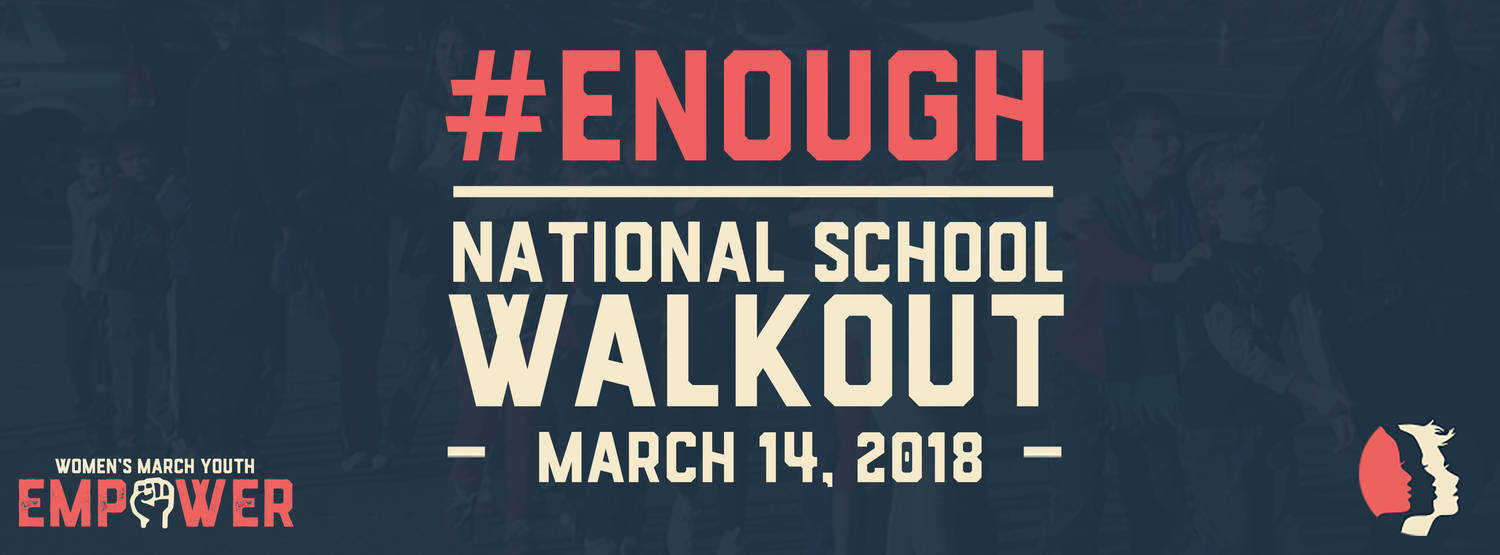
  • #NationalSchoolWalkOut Check In

    #NationalSchoolWalkOut Check In

    Did you have a safe Walkout today?

    best_52eafc6beaa67c5b3f26_national_school_walkout

  • CTE

    Perkins Funding

    CT Perkins Funding Distribution
    Distribution of Funding
    Their Mission

    The mission of Career and Technical Education (CTE) in Connecticut is to provide educational opportunities for all students for academic and skill attainment and career development, as life-long learners, leading to postsecondary education and/or employment in a dynamic, technological, and global economy.

    CTE Fact Sheet For 2017

    Great program, so why wasn’t Connecticut on the list of states to participate in the Development of a Statewide Model Program of Study?

    We have at UCON:Innovation

    Matt Nemeth is Connecticut’s 2017 America’s Small Business Development Center (ASBDC) State Star recipient. The award is given annually to an outstanding SBDC advisor from each state. Criteria include showing a strong commitment to small business success; making significant contributions to the state SBDC program; and being an exemplary performer.

    Third Bridge Grant Receives Additional $120K to Fund Student Startups The School of Engineering has been awarded an additional $120K in funding from CTNext for the Third Bridge Grant Program.

    An Act Concerning Innovation reads:

    This bill establishes a number of mechanisms to stimulate and support innovation and entrepreneurship in Connecticut.

    It establishes within Connecticut Innovations, Inc. (CI) a new entity called “ImpaCT” to support the entrepreneurship community and new business development in Connecticut (§§ 1-4). It gives ImpaCT a number of broad and innovation-specific powers and duties and creates a board of directors to carry them out. ImpaCT must develop and administer a number of programs to promote, among other things, university-based entrepreneurship, including a technology transfer office and a website to connect entrepreneurs to existing resources in the state. The bill funds ImpaCT and its programs by earmarking $87.75 million in existing Manufacturing Assistance Act (MAA), CI, and Manufacturing Innovation Fund bond authorizations (§§ 10, 16 & 23).


  • We’ve been relying on one another’s expertise

    Wiretapping, Healthcare, Lies, Journalism, talk, talk and more talk.  The radio, TV, Sirius XM, Twitter and Facebook are all alive and jumping from one Trump story to the next.  Between his Tweets and Fact Finding reality TV has become a thing of the past.  The question that is overwhelmingly  at the front of my brain is why do folks believe all the false statements and lies that  have been thrown at us.  Then I read the article below and #reasoning has been clearly defined.

    It’s one thing for me to flush a toilet without knowing how it operates, and another for me to favor (or oppose) an immigration ban without knowing what I’m talking about.

    Virtually everyone in the United States, and indeed throughout the developed world, is familiar with toilets. A typical flush toilet has a ceramic bowl filled with water. When the handle is depressed, or the button pushed, the water—and everything that’s been deposited in it—gets sucked into a pipe and from there into the sewage system. But how does this actually happen?

    …“illusion of explanatory depth,” just about everywhere. People believe that they know way more than they actually do. What allows us to persist in this belief is other people. In the case of my toilet, someone else designed it so that I can operate it easily. This is something humans are very good at. We’ve been relying on one another’s expertise ever since we figured out how to hunt together, which was probably a key development in our evolutionary history.

    … our dependence on other minds reinforces the problem. If your position on, say, the Affordable Care Act is baseless and I rely on it, then my opinion is also baseless.


    New discoveries about the human mind show the limitations of reason.

    Source: Why Facts Don’t Change Our Minds


  • Urgent!! News Release – Ben Carson is NOT the Problem

    Be very careful when you go out on the streets after dark.

    Yesterday at around 8:30 p.m. a guy wearing a black hoodie pulled out a pair of scissors on me.

    Luckily, I had enough agility and I pulled out a rock because if I would have pulled out paper… he would have won.

    Good night and I’ll see you again….

  • U.S. Courts of Appeals and Their Impact on Your Life – Lesson Plan

    court-of-appeals

    WASHINGTON/BEIRUT, Feb 5 (Reuters) – A U.S. appeal court late on Saturday denied a request from the U.S. Department of Justice to immediately restore a immigration order from President Donald Trump barring citizens from seven mainly Muslim countries and temporarily banning refugees.

    The court ruling dealt a further setback to Trump, who has denounced the judge in the state of Washington who blocked his executive order on Friday. In tweets and comments to reporters, the president has insisted he will get the ban reinstated.

    Trump says the temporary immigration restrictions on citizens from Iran, Iraq, Libya, Somalia, Sudan, Syria and Yemen, and on all refugees, are necessary to protect the United States from Islamist militants. Critics say they are unjustified and discriminatory.

    The judge’s order and the appeal ruling have created what may be a short-lived opportunity for travelers from the seven affected countries to get into the United States while the legal uncertainty continues.

    In a brief order, the appeals court said the government’s request for an immediate administrative stay on the Washington judge’s decision had been denied. It was awaiting further submissions from Washington and Minnesota states on Sunday, and from the government on Monday.

    The government’s appeal says the decision by judge James Robart in Washington poses an immediate harm to the public, thwarts enforcement of an executive order and “second-guesses the president’s national security judgment about the quantum of risk posed by the admission of certain classes of (non-citizens) and the best means of minimizing that risk.”

    Trump denounced the “so-called” judge in a series of tweets on Saturday and told reporters: “We’ll win. For the safety of the country, we’ll win.”

    This current sitatiou would be a great idea to introduce the lesson plan below and perhaps foster a child future leadership role.

    U.S. Courts of Appeals and Their Impact on Your Life

    What are the Courts of Appeals and what is their role?


    What happens when the Supreme Court denies review of a case decided by one of the 13 Circuit Courts of Appeals? What happens when there is a vacancy on the Supreme Court and the eight justices come to a 4-4 decision on a case? The simple answer to both questions is that the decision made by the particular Court of Appeals stands.

    The Supreme Court annually hears about 100 cases and rejects about 7,000 requests for review.  The decisions made by the Courts of Appeals in many of those cases are the last word. In light of that, Courts of Appeals have a major impact on the everyday life of law-abiding citizens, including teens. However, the Courts of Appeals aren’t as visible as the Supreme Court and they are not as widely known or understood.

    This courtroom or classroom activity gives every student the opportunity to serve as an appellate judge and as an appellate lawyer to gain a working knowledge of these vital appellate courts. Use the teen-relevant cases decided by Courts of Appeals and the supporting resources to discover more about the U.S. Courts of Appeals’ place in the federal court system.


    What’s Different About This Activity?

    ·         Need-to-Know Information

    ·         Every Learning Style is Involved

    ·         Teen-Relevant Cases

    ·         Flexible Approach to Activities


    Activity Resources

    ·         The Evarts Act:  Creating the Modern Appellate Courts

    ·         The U.S. Courts of Appeals: What You Should Know

    ·         The Last Word: Court of Appeals Cases You Should Know


    Related  Content

    ·         Courts of Appeals Cases Related to Miranda v. U.S.


    In Advance of the Activity

    ·         Teachers prepare students for the activity by covering the material in: the Evarts Act:  Creating the Modern Appellate Courts and the U.S. Courts of Appeals: What You Should Know.


    Activity Overview — Each Three, Teach Three

    Students are organized into teams of three members for a round robin of modified, appellate court oral arguments. All students prepare and present as lawyers.  All students have the opportunity to serve on three-judge panels, just like the Courts of Appeals.

    Round #1

    Each Three-Person Team:

    ·         Prepares arguments for a case they choose from the provided list;

    ·         Anticipates and prepares questions (and answers) that the student-judges might use during the oral arguments.

    Round #2

    Each Three-Person Team

    ·         In Round #2, students switch roles and repeat the exercise with the lawyers serving as judges and the judges serving as lawyers.                                                                                                                                                                                                                                                                      

    In the Courtroom or Classroom

    Teams. To begin the activity, students form three-person teams. Teams stay together for the duration of the activity, and all team members have the opportunity to be judges and lawyers.

    From the provided list, teams select one of the real-life cases of interest to them. They collect information about their case by doing Internet research. Once they organize and analyze the research, student-attorneys work with volunteer, adult attorneys to write talking points and questions and answers for the oral arguments. The same, three-person team develops arguments and questions for both sides of the issue.


    Phase I

    Student-Attorney Roles.  Student Attorney #1 prepares arguments to present on behalf of the government’s position.  Student-Attorney #2 prepares arguments to present on behalf of the defendant’s position. Attorney #3 anticipates and writes the questions and answers the three-judge panel can use or modify when addressing each side during the hearing.

    Written Arguments/Briefs. Panels make a copy of their talking points and Q/A sheets and give their folders to the facilitator. Student-attorneys keep their originals. The facilitator redistributes the materials to student-judges sitting on three-judge panels who will hear the arguments


    Phase II

    Student-Judge Roles.  Student judges prepare for oral arguments by reading the student-attorney briefs distributed to them. They are to do no outside research or reading about the case in order to base their decision on their review of the  record that is put before them.

    Student-Attorney Preparation. First, each team prepares to be attorneys who present their selected case to a  three-judge peer panel. For both sides of their case, the student attorneys 1) develop talking points for arguments; and 2) write questions and answers.

                1.         Oral Arguments.  Each three-person, student-attorney team presents arguments                           to its assigned, three-judge panel. The judges ask questions. They may use the                               questions drafted by the arguing team and/or add their own questions.

    2.         Conference.  The three-judge panels go into conference and decide which side      prevails. They return to the courtroom.  Each panel announces its decision and the   rationale for it.


    3.         Wrap Up.  The judge joins the students and conducts a mutual Q/A session with   the students on the exercise and any topic of interest to the students. The question  period is followed by informal socializing with the judge and the volunteer  attorney.


  • Charlotte Metro Credit Union – CONGRATULATIONS HERMAN J. HOOSE SCHOLARSHIP WINNERS

    herman-hooseIt’s that time again

    In 2017, Charlotte Metro will award twelve $2,000 Herman Hoose Scholarships to student-members of the credit union. Applicants must be graduating from high school in the current school year and enroll in an institution of higher learning in the fall of the same year.

    Interested? Learn more and download the application. The deadline to submit your application is March 31, 2017.


    Download the attachment below – you may have to click twice

    herman-hoose-2016

    Congratulations Herman J. Hoose Scholarship Winners Ten graduating seniors earn $2,000 toward college tuition Charlotte, N.C., June 10, 2013 … Every year since 1985, Charlotte Metro Credit Union has awarded the Herman Hoose Scholarship to deserving and capable college-bound young people. To be considered, scholars must be a member of the credit union.


    Source: CONGRATULATIONS HERMAN J. HOOSE SCHOLARSHIP WINNERS

wpChatIcon
wpChatIcon